My Story
My name is Shila Yukuli Paia, and this is my story which also explains how and why SoilChild was founded.
1
My Village,
My Country

I was born in Yuna country of Hela Province, Papua New Guinea. Hela only became a separate province in May 2012 from Southern Highlands Province. In 2020, the population of the province was estimated at 400,000. Hela has three district electorates: Tari-Pori, Komo-Magarima and Lake Kopiago-Koroba. Yuna country occupies the land from the great Tagali River, in between Mullar and Owen Stanley Ranges, extending to the Strickland River to far west bordering West Papua. Yuna is the second largest tribal and language group from the Huli. The Yuna is within the Lake Kopiago-Koroba district electorate which comprises up to 200,000 population, mostly young people.
My village is located at the border of North Koroba and Lake Kopiago local government council jurisdictions. Its name Haredege means ‘barren’ in the Yuna language, hence one of my goals since founding SoilChild has been to change the name to Pakura, still work in progress. Pakura has a population of about 2000 eligible voters and is made up of six major clans: Birika, Eto, Pero, Nogania, Hingu and Yakuni. The landscape is hilly and mountainous, with mostly clay soils. Sweet potato is the only staple grown and consumed. Other seasonal crops include pumpkin, beans, corn, taro, sugarcane, dark green leaves and peanuts.
“babies are usually born in bushes and caves”
When I was a child, there were no income sources: no markets, no roads, no airstrip, and no electricity or communication infrastructure. A few years ago, local MP Petrus Thomas contracted a local construction company to maintain the Highlands Highway that passes through the village to Lake Kopiago. However, due to inadequate engineering and construction, riverways have been destroyed leading to road erosion, and huge rocks create large potholes making it impossible for cars to use the road.
A basic health centre to the east and an aid post to the west are each about an hour’s walk from the village – an orderly provides simple treatments at Kaguape aid post, women have no access to ante-natal and obstetrics care, and babies are usually born in bushes and caves. Children often miss important immunisations and treatment for acute illnesses. Youth social issues including drugs and alcohol abuse, home gun smuggling, violence and social disorder are escalating.
2
My Family
I am the oldest child of seven. My mother Porawi is one of six sisters, daughter of chief Geima Ilu’s third wife, Nendege. My father Paia was a chief in his own right, son of Embetayea from the Birika clan of the Yuna tribe. When my mother gave birth to me in a nice warm cave on a beautiful day in October 1975, I was small for my gestation. I was however born in an era when PNG was transiting into an independent nation after gaining independence from Australia on 16 September that year.
My mother feared that being the first born of a chiefly family but a low birthweight girl child risked social exclusion, stigma and shame to the clan. However, her mother Nendege was a force to reckon with: although uneducated, she was skilful, intelligent and formidable. Her people revered her. She made salt and traded with other clans. She had her own cultivation strategies. She had food preservation skills which were sought after in times of famine, drought and frost. She was famous for her no-nonsense approach to life. Some could have seen her as a custom adversary, but she had a well-respected status in the family and the village. My grandmother took on the role of raising me from the start.
3
Early Education


By the time I was seven, I had achieved basic literacy in our local Yuna dialect through Bible classes. Our first Brethren Missionaries from New Zealand, Brian and Helen Telford, were absolutely wonderful people. They were based, with their four beautiful children, in Arou Brethren Mission Station and would occasionally join us at our Kamenda Christian Brethren Church (CBC). They trained local youths and women leaders in Bible literacy and most were learning to read the New Testament which had been translated into Yuna by Glenda Giles and other CBC missionaries. Our own missionaries taught basic literacy through local churches by training young people and women leaders to be Sunday School teachers and women group leaders respectively. The fourteen training modules included famous bible stories transcribed in the Yuna dialect, which complemented the counting system in the Yuna dialect. One had to complete all fourteen modules to obtain a certificate – which I did before I was seven, which is primary school age in PNG. And then our very first ever primary school at Pakapi parish was opened.
At that time in 1981, Pendepa Hera, one of my father’s relations was the Project Manager when Haruru Matiape was local member of parliament for the electorate. So, he and the entire provincial administration team visited our village at Kamenda to officially inaugurate the school, although it didn’t come into being with classroom and teaches’ houses infrastructure. Almost the entire tribe was gathered for this history making event as I remember vividly. My people did not know about what a school can do let alone about the importance of education or the system of education in the country at that time. PNG then had adopted an education system where there had to be numerous drop outs throughout the child’s formal education lifetime. This means primary education started at about seven years of age from grades one up to six. At grade six, a national examination determined whether the child continued to high school or became a drop out. High school then continued four years from grades seven to ten. At year ten, a second national examination would determine whether the child continued on to national high school or a clerical college or became a drop out. National high school was for years eleven and twelve before going to university. Those who scored an average examination scores which didn’t qualify for national high school went to a clerical college such as teaching, nursing or apprentice courses.
“They had given me another year. I was shaken and upset.”
At the official inauguration, a committee for the new school was nominated with a Board chairman, secretary, treasurer and board members. The committee then set out to work on making recommendations for teacher recruiting, enrolling students for the first time in many generations and working on the school infrastructure itself. As if it happened yesterday, I cannot forget how the student enrolment took place at my local CBC Kamenda that particular day. The new school’s new committee called on all parents who had children eligible for enrolment to come forward so their names could be written on the new school’s roll book. Every child who was eligible had their names taken and ticked off meaning confirmed to start school in the new year. I was hiding behind a yard tree near the vicinity hoping and praying that I would be enrolled. Unfortunately, my parents agreed with the committee that I was short and stunted and quite immature to be enrolled. They had given me another year. I was shaken and upset.
The actual classroom buildings took only a few months to complete. The entire Kamenda and Pakapi parish mobilised to work on the new school project. People gathered in numbers, young and old. The piece of land where the school was to be built was cleared, earth dug, tree roots excavated all by ordinary hands. In no time, buildings were erected. Many classrooms for all classes, many teachers’ houses, many pit toilets, playing fields and playgrounds came alive. It was a work of miracle. People used bare hands, local bush materials simple basic tools. It was amazing! The whole new school was built in just a matter of few months. Then in no time there were teachers teaching at the school from other provinces. Many of the teachers had been recruited from other provinces while only a handful were from the local Yuna surrounding villages who had obtained their teaching training in other provinces.
The brand-new year 1982 was history unfolding in this tiny, remote, primitive community. People were yet to learn about school and the benefit of education in the years that followed. For now, it was time to look for money, soap and clothes to send children to school. It was scary for parents because there was no money in the village let alone any parents. Children had no clothes but grass skirts for girls and traditional wear for boys. But that didn’t stop any one. Both parents and children were excited and ready to move with history.
“I was to wake up at 5am every morning”
That afternoon, after all the drama and excitement of student enrolments leaving me out, I went home feeling very rejected. My Nendege knew what had happened and called me in to our tiny hut. She encouraged me that I shouldn’t give up but to attend classes at my own risk. So, we made a team. We prepared my billum, grass skirt and food. I was to wake up at 5am every morning. For one-hour every day, from 5am to 6am, I had to run down to Randupi fall and take a freezing cold shower, then run back to the house and cook my sweet potatoes over the fire, have breakfast, get dressed and be ready to start my long 5 kilometre walk to school. My Nendege had specific requirements for my school dress code since the school committee didn’t really specify on this. I had to rub nice fresh pork fat all over my hair so it was shinny and thick. I had to rub a little bit of pork fat all over my tiny bare body to moisturise my very brown dry skin which was exposed to weather since I had no top to wear. I had no comb so my hair was very thick and strong. My grass skirt had to be thick and new painted at the bottom ends and cover my thighs at knee length. Nendege measured me and made them herself. I would carry my billum of cooked sweet potatoes over my shoulder like a boy. This practice was exceptional because Nendege couldn’t be bothered, she wanted my thick, uncombed hair to remain as neat as possible, otherwise carrying my billum over the head would make it look untidy. The first day, I was ready. Although my name wasn’t on that roll book, I was very confident because Nendege was very confident.
It took a good hour to walk the 5 kilometres from our Ranupi parish to get to Pakapi, to Haredege Primary School for the very first time. The first day of my school, my Nendege came with me to make sure I wasn’t kicked out of the classroom. She waited the whole day. School started at 8am through to 3pm. I joined the grade one A class. Our class patron was Mr Sawi Steven Wangiano from Kangegana, the village next to ours. Later I found out that he knew I was a relation of his. He went through the roll call and didn’t find my name. He asked how I got in here. I replied that I wanted to go to school. He reassured me to stay in class and he would test my ability to catch up with my school work and my ability to learn like the other older children. He would test me to decide my fate whether to continue or to remove me from school to go home and mature for another year! I was excited about the challenge and agreed. My Nendege later came and had a brief discussion with Mr Wangiano that I was capable to go to school this year. According to her, there was no reason why I shouldn’t qualify for enrolment. The first term of schooling was my verdict. I was told that I was doing better than the other older children in the class and that Mr. Wangiano would rather keep me. So, I continued my primary education.
I always looked forward to going to school every single day. It was the best thing I did in childhood. I was always early, always neat and always had food to also feed other children who were hungry. My hair was the only problem. I once got beaten on my head for un-combed hair. One uncle called Hepale was observant. He made me a wooden comb and surprised me one afternoon. I could not believe my most priceless gift! From that time on, I collected awards for cleanliness at school apart from my other academic excellence prices. We sat for our grade six final examinations in the final term of the school year in 1987. The first class of grade six had over 50 students divided into only two classes of A and B. I was in A. When the final exam results came out, there was a huge ground-breaking graduation ceremony at the Haredege Primary School grounds in December of 1987. We were given prizes and awards. The 38 of us, six girls and 32 boys had passed the grade six national exams and were selected to continue high school the following year at Koroba High School.
4
High School
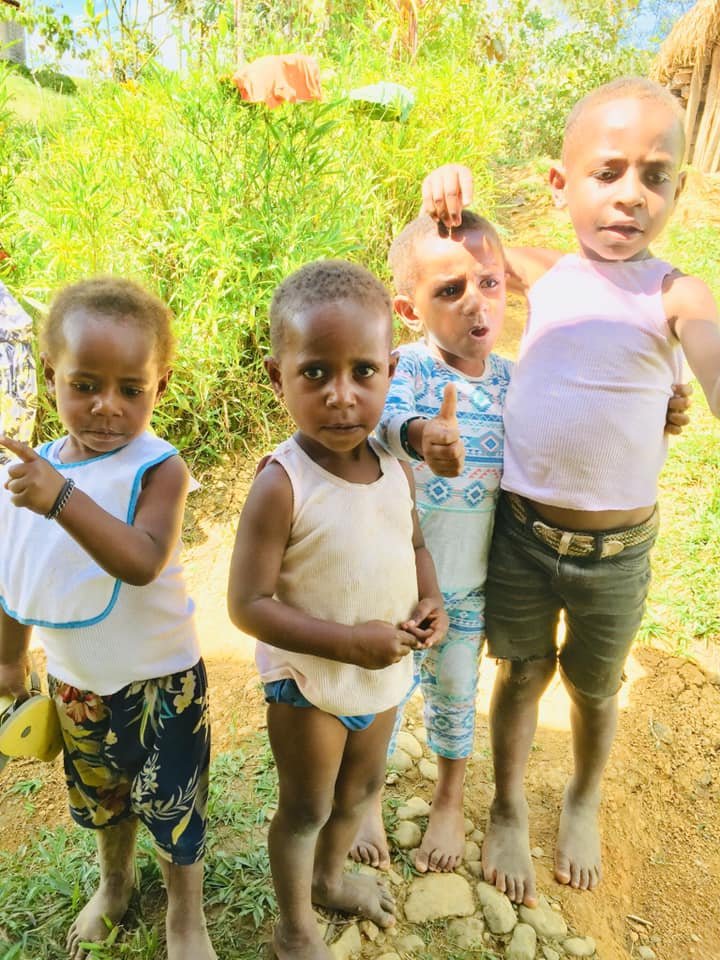


Koroba High School was about two days walk from our village. In those days, it was the only high school for the entire district electorate which was located in Kakaren, South Koroba LLG. Over the years, two other high schools namely Paga and Kopiago have been built making three high schools for the electorate. To pay school fees for 38 students was a huge community responsibility. In these poverty-stricken communities, social capital and bonding is what holds society together. This means, when there is a big event such as a bride price payment, a cultural compensation payment, or paying school fees for 38 children to attend high school, every single person and family would take ownership and come together to contribute to make things happen. The same happened on that Sunday following our year six graduation when the entire Pakura village gathered at the school sports ground to talk about the 38 of us selected to go on to Koroba High School the following year. What that meant was that the community had to discuss what resources they had, and based on what they could afford, only a few of us would be finally selected in the privileged group to go onto high school while the rest of us not selected in the final community list would join our other drop-out mates and stay in the village.
Of the 38, the six of us girls were the least privileged simply because it was a normal social and cultural practice for girls and women to be the least preferred of the genders to access any opportunities and have preferred choices. So, I didn’t have high hopes of been selected, having realised my rejection for enrolment in the first place to even enter into primary school. In my Birika clan, we were five us in total, three girls and two boys. There was my name sake Yukuli Lumiya, daughter of my father’s cousin, Betty Pepoko Kipa, daughter of my father’s other cousin and myself. Then there was my cousin Stanley Aroko Newe (who is now an engineer working and living in Western Australia), Keps Takili Wisani (son of my mother’s cousin sister adopted into Birika clan by right).
The Pakura community on the day established their own selection criteria. The first criterion was gender, boys were preferred more than us girls. Second criteria was school grades. One had to have acquired an academic excellence award in the last two school years, that is in years five and six. Third, the immediate family of the child had to have at least half of the school fees, pocket money and proper dress requirements. The students were going to a boarding high school therefore had to have bedding, toiletries and other personal needs. The school fees at that time were up to PK300 (Aud150) per year, which a lot of money to the village, let alone a family. And the final selection criterion was very important because these young children were travelling to a far away school from their parents for the first time, to an unknown place, often considered to be warring country. Therefore, this criterion was maturity. Majority was measured on how confident and socially interacting the particular child was.
“I went home feeling rejected and hopeless one more time”
The verdict was handed down for my clan. Out of the five of us, only two, Yukuli Lumiya and Stanley Aroko Newe were selected. I was dropped due to immaturity. My cousin Betty was dropped due to her age. She was older than me therefore she could stay back in the village and marry, which she did in the same year. And my cousin Keps was dropped because he wasn’t smart enough according to the selection panel, the Pakura community. Yukuli my name sake was lucky to have been offered a place with the Tari Catholic Secondary School. The community had faith in the values of the Christian organisation therefore she was ready to be supported. Of the 3 remaining girls, only Priscilla Rapali Waya was selected to join the others to Koroba High School because her father was the Haredege Primary School’s Chairman at that time. So, there were in total 10 of them, two girls and eight boys selected in the final list for high school. The entire community brought in their contributions in terms of pigs, food and money to support the immediate family members of the ten students and the decision was finalised.
That same day I went home feeling rejected and hopeless one more time. Apart from being left out of the final list, I was seen as immature and naïve young girl with no vision for my life and future. What could such a girl even do in the village? What about all my school awards? I was doing well. I loved learning. I loved adventure. My Nendege was waiting at home. She reassured me never to lose hope. She sat me down and talked to me about serious things. She told me once again, as she did when I was rejected for primary school enrolment, that she would make sure I ended up in high school with the other ten no matter what. She made plans and made sure I listened to all of the instructions and followed them. We were about to break serious cultural norms and social expectations.
“I was not going to give up”
My mother’s cousin sister Yanapi had recently returned to the village from Port Moresby. I heard that she went there when she was young and had returned after several decades. Nendege had seen her wear a certain Meri louse which she thought would fit me. A Meri Blouse is a PNG national design sewn by the women and all women in PNG wear them. So Nendege suggested that I should go to her with some of the best fresh food from our garden for her in exchange for this blouse. She had divided the roles between us. She was responsible for organising the pocket money, the bag, and the food which I was to take with me. So, I left for my aunt Yanapi’s house early one morning when she would still be in the house. I presented her with food from our garden – sweet potatoes, pumpkin and vegetables. I asked her for that blouse. I said I wanted to borrow it to wear for Sunday church service. She agreed and lent me the blouse. I returned home with the happy news.
Nendege was ready with a string-bag full of sweet potatoes, as much weight as I could carry. She had PK5 for me, and I still don’t know where she got it from. She was a champion in preserving food and other items so I would not be surprised if she had this PK5 for many years, if I could ask her now. PK5 in those days was a lot of cash which could last me for a whole year. She told me to try on the blouse so she could judge. She admired me. She told me I was just beautiful and adventurous. I was full of energy and courage. I was intelligent and I was going to be strong. I was not going to give up, nor fear. I had to do one thing. That was to play my own game. I was not to envy some of my other colleagues. I was not to ask anything from anyone in terms of money, food and clothing. That I had to pray and have faith in God and in myself. And I had to use my money wisely which means I had to spend 10 toea of that PK5 every weekday, no spending on weekends. And I had to cook one sweet potato every single time I had absolutely nothing to eat. Most importantly, I was to share anything I had with anyone who was needier than I was. I was to make friends with those everyone else despised. I was to play my own game. And I had to work very hard at anything I did. I was never to accept failure ever. She ended. My journey started.
“I was 12 years old while I walked two days to get to high school that day”
All this was a big secret between just the two of us. I rose up early the day scheduled for the final students leaving the village to walk to Koroba High School. She cooked my sweet potatoes in the glowing ash while I ran to Randupi fall for the last time, at least for the first high school year to immerse in its fresh divine waters and wash away my bodily dirt and emotional rollercoaster. I felt fresh and anointed by my River. I was going to miss my River. Though I didn’t know how the journey would begin, where I was going or how to manage my life, I felt excited and adventurous. I said goodbye to Randupi. I went home, got dressed into my new dress. I had to always rub pork fat on my hair and body, it was a tradition in our two-person household. I had to comb my hair. I had to wear my blue necklace, always. I looked beautiful to her. My sweet potatoes were cooked and packed in my billum. I had no other belongings, only the comb. We said goodbye to each other. I saw a tear in her eyes. She reassured me she was proud. She walked me down the track. It took us about half an hour to come to the main road where everyone else was mobilised for the start of the journey. I joined them. Everyone was stunned and started asking where I was going, and why. Nendege told them not to ask. I was on my journey to high school with the others. I felt like my life was left behind, Nendege could come with me too! I was 12 years old while I walked two days to get to high school that day in 1988.
A student in a senior grade, called Naomi Tambu from Fugwa, whom I later found out was a distant cousin, saw that I wore one dress every day for two years. She invited me into her dormitory and presented me with a pink dress which had a round neck, elastic at the waist and flying skirt. It fitted me perfectly and I enjoyed it. When I was in my ninth grade, one of the students came calling for me from the teacher’s office when I was in my dormitory. I was scared to the core. Often you would be singled out for punishment if you were caught breaking any school rules, for example littering or talking with the opposite gender. By the time I strolled out of my dormitory, I was shaking. I was called straight into the Principal’s office. He called my name. He wanted me to confirm whether I was Yukuli Paia. I said yes sir. ‘Oh well, you have been very lucky today’. Your uncle has sent you a parcel from Port Moresby’. There it was on the table, a huge parcel. All wrapped neatly with stamps all over. I was in shock. I didn’t have an uncle in Port Moresby. I couldn’t ask. I took it and ran to the dorm. I carefully opened it. There was a beautiful orange dress. Today I know it was an official business dress, made of very high-quality fabric. I vividly remember the little delegate flowers at the front near the neckline. It was short and smart. Then there was a business jacket that matched its colour. There was a towel, K100 cash in notes. It was from someone called Paliago. I have never met him, so I didn’t know who he was. He is my father’s cousin, whose son Pandawi is now a SoilChild volunteer caretaker of the block of land at Dauli near the Hulia River. I felt loved, appreciated and accepted. I felt very affluent. I felt very optimistic for the future.
“I felt accomplished”
Koroba High School was a boarding school. We were fed brown rice with limited protein and vegetables every dinner and a hard biscuit for breakfast. Students from the nearby parishes often went home to collect food and firewood from their homes. We learnt to survive with little pocket money and extra nutrition. Four years went quickly. I enjoyed learning. I enjoyed making new friends. Often times my loyal friends paid for my bus fare to travel to Tari town with them. I would stay the weekend in their villages. I enjoyed adventure. I loved athletics and basketball. During school carnivals I represented my school in 100 metres and basketball. I loved all subjects but especially science and agriculture. At the last term of my fourth year in 1991, we sat for our final high school examinations. I was cool and confident. After completing the exams, we were told we would graduate before going home. I needed a new dress for the graduation ceremony. I joined my friend Lindsy Tatai to Tari and stayed the weekend with her. I bought myself a beautiful floral dress at the Tari market. At graduation, I collected three awards. One for sportswoman of the year, another for good behaviour and a third for most improved. The prizes were three envelopes of PK5 each. My father was there for the ceremony. So, I gave him one envelope and kept the two. After graduating, we set out packing. I packed my few dresses I collected over the four years in my usual string bag. I felt accomplished.
5
To Nursing College
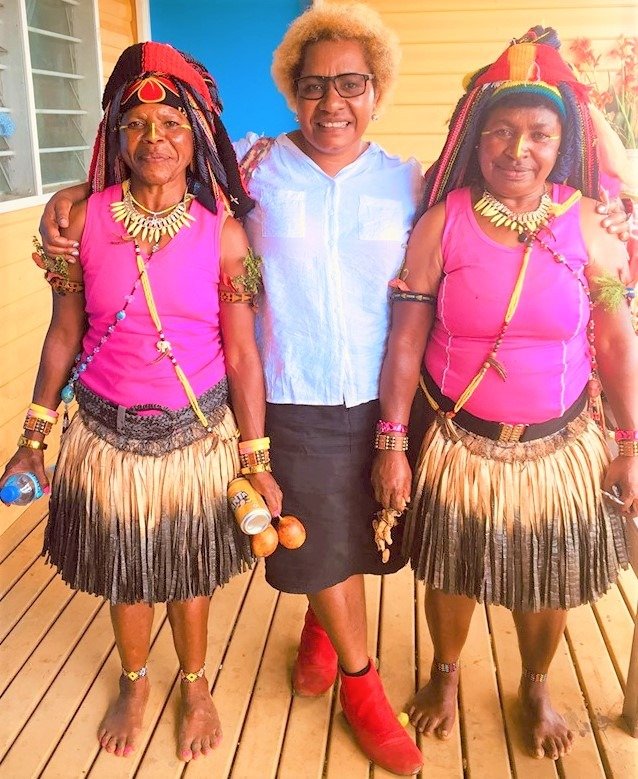
We walked home to the village. There my Nendege waited with elation. I handed the two envelopes, the dresses and the money received from my uncle. We celebrated. The village celebrated. I didn’t have any grudges against anyone. I was naïve and innocent. All I cared about was pleasing my Nendege. We waited in the village for our offers through to January of the following year. One day, a teacher from Kelabo was passing through the village and handed me an envelope with my name on it. I opened it and there it was: my Year Ten Certificate with three Credits, one Upper Pass and some placings below tens out of many students in the other minor subjects. In the envelope was also my offer from the Balimo School of Nursing, and a national government scholarship for the nursing college. The letter mentioned that I was to travel on a certain date to Tari and collect my ticket to Port Moresby and on to Balimo. I read everything to Nendege. She was proud. This time the entire family and clan gathered and made a feast. My cousin Stanley and the others also took out offers to go to national high school and other colleges. I travelled to Port Moresby. I was 16 years old when I entered Balimo College of Nursing in Western Province. The senior nursing students thought I was a child of a lecturer. I was still tiny.
Four years of nursing college was enlightening. Since my childhood literacy days, I loved learning. I excelled at college and took out awards in all subject areas. I loved anatomy, philosophy and medical nursing. I took out dux while graduating in July of 1995. As soon as I graduated, I went back to the village to find that Nendege had passed away and no one had notified me. I mourned for all the days of my life in the village. I was very poor to make a remembrance feast for her. I was not the same person after losing her. I lost my energy, strength, source and security. I lost half of me. There was a big hole in my life, which took a long time to heal. Anyway, I didn’t stay long in the village because I had a job offer in Kapuna Rural Hospital run by a New Zealand Mission organisation called Gulf Christian Services. I left the village and started working from August 1995 as a Registered General Nurse. Though the wage was only about Aud100 fortnight, I enjoyed my work. I became mature personally and professionally. I made many friends. I was happy.
6
Marriage and Divorce
I received a phone call through the hospital office from Port Moresby in September of 1997. I was told to travel to Port Moresby to participate in a national women’s convention held by the Christian Brethren Churches. My ticket was provided. So got permission from my bosses, left my belongings, and travelled to Port Moresby from Kapuna that September day. To my surprise, it was made impossible for me to return to Kapuna. There was an arrangement in place by the church leaders with my parents that I had to marry certain man. My tickets were all booked to the village. So, we all flew to the village where my dowry was paid. I was married in December 1997.
Between December 1997 and August 2008, I lived my married life. I had two beautiful sons. I worked as a career woman. I led other women. I trained them and empowered them. I received an Australian government scholarship and did a Bachelor degree in Health Sciences at Victoria University. I returned to PNG and worked in the community and non-government sector. I refrain from talking about my married life. But in August 2008, I filed for divorce at the Erima Magistrates Court in Port Moresby. This was history in the making as women in PNG are culturally not entitled to file for divorce. My father however consented to the divorce and I succeeded. In 2011, I took the two boys and moved to South Australia under another Australian government to complete a Master of Health and International Development which I completed in 2012. In 2013 I was one of the awardees of an Australian Prime Ministers Pacific Leadership Award. And currently I live and work on SoilChild while also studying PhD from South Australia with my sons.
7
A Matter of Equity

As adventurous as I was, I was a serious risk taker. I had always questioned why things were happening the way they were. Why were men and boys more valued than women and girls? Why did we have to walk long hours to get to the nearest school? Why were there no schools nearby? Why were women giving birth to beautiful babies in caves? Why was giving birth itself considered as a dirty thing? Why were my parents and community so poor that they couldn’t afford school fees, let alone pocket money?
My curiosity and questions crystallised into an enlightened sense of fairness, privilege and inequity. I came to realise that we lived in a world where some people had the privilege of choice, opportunity, power and wealth while others didn’t. Those that didn’t have privilege were in a place of powerless struggle. Their powerlessness made them silent, they had no voice in society to talk about their views, their situations or their rights. I didn’t have the opportunity to go to school, or to access health services or to do business or to eat good food or to wear good clothes.
“Fight for justice”
Despite all of this I was determined to travel my journey to be where I am today. I feel angry about the ways in which our government is misusing our resources. Angry that our roads, hospitals and schools have gone backwards since I was a child. Angry that some children are still not at school. Angry that our mothers are still having beautiful babies in bushes and caves and many are dying. Angry that our young people are dropping out of school and wandering the streets doing nothing, hopeless and with no future and no dreams. Angry about the way we fight our own tribesmen, we have no peace in our society, our family and even ourselves.
I cried many times over my many struggling years. I don’t cry anymore. I want to fight. Fight for justice, for education, healthcare, money, business, prosperity and a rich population. Fight for everyone to go to school, to have babies in health facilities, for everyone to have money, do business, travel and live in good houses. For everyone to have phones, internet, computer, and opportunities and choices in all areas of life. To sleep in good houses, on a nice bed, have electricity, eat good food and be happy and at peace with themselves and their family and community. This was informed by my personal experience, but I also saw it clearly manifested in society. Many suppressed people in a community meant that, through generations, there was no positive change, and in fact no real change at all. From a place of suppression, individuals become very vulnerable to decoding their own potential, and incapable of even hoping for generational change and personal growth.
8
A Dream Realised

It was then that my dreams of truly making a positive impact began to dawn. I was angry with such an unfair system, an unequal world. Every person should be given the chance to thrive and prosper whether through decent education, health service, good nutrition or political voice. So, in 2007, influenced by a dramatic event in my own life, SoilChild was eventually conceived. A national non-government organisation called Women In Development Foundation PNG (WIDFPNG) was then registered with the Investment Promotion Authority in 2009 to implement SoilChild. Since 2017, WIDFPNG has established partnerships in Australia, Taiwan and PNG. SoilChild has spoken for itself with gaining a credible reputation internationally within a wide range of stakeholders including academic institutions, public sector agencies, private corporations, charity groups and individuals. SoilChild health projects have accomplished shipment of biomedical, health care and disaster relief supply from South Australia to Hela Province and other parts of PNG. SoilChild education projects has gained successful grants from overseas donors and completed a model library and seven-in-one classroom in Dauli Dem school of Hela Province. And SoilChild poultry project has been piloted in ATS settlement of Port Moresby. Over the last three years of active project implementation, over 30 volunteers have been trained, school resources shipped and distributed to primary schools, women leaders mobilised and trained on the model and network with stakeholders established.
The SoilChild development model is truly a different way of defining poverty as the underlying problem. Poverty is not just not having enough money. Rather it is a phenomenon rooted in suppression, powerlessness and voiceless. It is unequally distributed and passed on through generations as long as system continuously disadvantage people. SoilChild model of development acknowledges this form of poverty and strategises to decode individual potentials to achieve their full potential to work through a system that disadvantages them. And we believe in people to be their own change agents, working with one individual at a time to impact communities, society and nation.